Brands
-

Aldo Viola bases his work on three pillars: Excellence, Tradition and Ecology.
For Aldo, the purpose of producing wine is to arouse emotions and tell stories, those of the place where it was produced. -
From the outset, the Alheits were convinced that the greatest potential of Cape Town viticulture lay in its white wines. The Alheit estate therefore focuses on producing white wines, mainly from old Chenin Blanc vines.
The production methods are very natural: Suzaan and Chris Alheit use only indigenous yeasts to make their wines and are very hands-off during vinification. -
Antica Distilleria Quaglia - Del Professore
The creator of Vermouth del Professore, Leonardo Leuci is a passionate man with great expertise.
With a background that also includes experience in sommelier work, Leonardo Leuci has combined his know-how in spirits and wine to create a handcrafted range (vermouth, liqueur, gin...) in collaboration with the Quaglia distillery in Piedmont. -
Here we are at the extreme south of the region in the Piceno area which touches Abruzzo.
This is one of the reasons why we also find a lot of Montepulciano here, it gives drinkable and opulent reds but more in the greed than the power. This estate also produces a very interesting white because it is very expressive and light at the same time resulting from a blend of three local grape varieties. -
Sabino Loffredo, creator of the Pietracupa vineyard in Campania, is undoubtedly one of the most capable, instinctive and consistent white wine producers in Italy. We should not neglect to take an interest in his red wines, that would be a mistake. The wines of Pietracupa have conquered a certain place among the best Italian wines.
-
Located in Marsala, in the west of Sicily, Nino Barraco works according to organic principles, without being certified.
The estate has gradually become one of the greatest ambassadors of Sicilian wines, thanks to its traditional and authentic production, and to its whites with a superb minerality. -
Founded in Santa Cruz in 2008, and drawing on 35 combined years of wine production and sales in California, France and Italy, Alex Krause and John Locke focus on the perfect balance of fragrance, balance and thrill with a particular taste for varieties that provide enormous pleasure and reestablish a direct connection with the sensual world.
-

From century-old vines, cultivated according to the principles of biodynamic agriculture, the Matsu estate produces powerful wines, with personality, offering a softness and an elegance unusual in the wines of the Toro appellation.
-

Bruichladdich is a whiskey distillery located on the Isle of Islay on the west coast of Scotland. It is one of the nine distilleries on the island and the only one to have its own bottling line.
The distillery produces two particularly peaty versions of whiskey: Port Charlotte and Octomore. Bruichladdich also produces an original gin: The Botanist.
-
Buffalo Trace is a venerable 200-year-old distillery on the Kentucky River, not far from a ford once used by bison herds, making it a strategic site for Indian tribes during hunting expeditions.
Today, she innovates by creating multiple expressions of bourbon and relying on extensive research on barrels.inescapable!
-

The most remote distillery on Islay, perched way up north, is the only one to use natural spring water from Margadale to produce two different spirits: Bunnahabhain and Moine (which can also be called Peated Bunnahabhain).
The Bunnahabhain range is predominantly aged in ex-sherry casks and is natural in colour. The maritime influence and thoughtful craftsmanship make you want to travel to the depths of Islay, closing your eyes to discover the rugged landscape captured in these unique and complex single malts. -

Cantina Furlani is young and dynamic, a successful combination of tradition and avant-garde. The production is still completely handmade.
Grapes are grown and vinified with passion, always respecting nature, the environment and animals.
In the cellar, the work is 100% natural, without yeast or flitration. -
Thanks to a recipe specially designed for the King Thanks to a recipe specially designed for the King of Sardinia and Piedmont, Carlo Alberto, the wine merchant Tumalin Baracco Bartolomé de Baracho kept what was the royal drink alive. He named it after the king when he died in 1849.
Today, the company remains faithful to this precious recipe, while improving it.
It also produces amaro and other vermouths that are sought after by wine lovers around the world.of Sardinia and Piedmont, Carlo Alberto, the wine merchant Tumalin Baracco Bartolomé de Baracho kept what was the royal drink alive. He named it after the king when he died in 1849.
Today, the company remains faithful to this precious recipe, while improving it.
It also produces amaro and other vermouths that are sought after by wine lovers around the world. -
The cellar Embres and Castelmaure is nestled deep in the massive wild Hautes-Corbières.
The wine flowing from this hard and bitter land has depth and charm. By a gray time, if you do not know what to do and then go to Embres Castelmaure. And then your sadness will vanish before the wilderness. His proud vines tortured hillsides, proud to defy time. -
 Catherine Bernard produced two original vintages on 3 acres in organic farming only in red wine, on the Saint Drézéry northeast of Montpellier.
This bottle a blend of Mourvedre and marselan surprise in the current atmosphere to produce the very southern wines opulent characters (wooded) and concentrated (extraction of fruit jam).
Warning: the philosophy and good humor in the vineyards.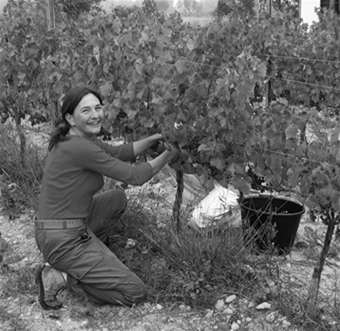
-
Cave Les Grands Vignes - Nicolas Badel
Installed on 8 hectares between Limony and Vernosc-Les-Annonay, Nicolas Badel has a unique trajectory. After having held, in a "previous life", a design office in mechanical sheet metal, he decided to convert to viticulture in 1999, creating a domain from scratch. Without a local, without vines, without training ... he learned on the job, accompanied by an oenologist, starting with rental vines, and supplying his wines to the cooperative for ten years before standing on his own feet from the vintage. 2010.
No sulfur in the vinification, just a little bit of setting, no inputs, a lot of presence in the vineyard, Nicolas approaches his profession with a form of obviousness that is reflected in his wines. -
Centopassi is the wine soul of the LIBERA TERRA association which cultivates the land confiscated from the Sicilian mafia located around Corleone in the center of the island.
-
Adrien Renoir is one of the most promising young winegrowers in Champagne. He develops cuvées focused on purity and tension.
He joined the family estate in 2015 and led a real revolution there by removing weedkillers, initiating an organic conversion and vinifying 100% in wood!
A daring that can be found in his champagnes! -
The champagne Billecart-Salmon in Mareuil-sur-Ay, faithful to its reputation emphasizes quality. The wines of Champagne are remarkable in a very elegant style.
-
-
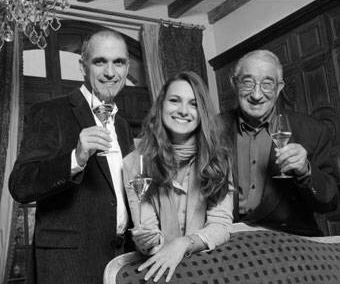
Drappier, these are colorful champagnes, generous in their aromas, which are expressed in the mouth by their earthy vinosity. We find here a dimension of frank and unvarnished terroir, vinified with minimal doses of sulfur.
-
A breath of fresh air is blowing over Champagne with the confirmation of this young house among the most qualitative in the region.
It was born in 2005, founded by Guillaume, Richard and Rodolphe Frerejean. These siblings of Champagne origin dreamed of confidential artisanal production on their excellent plots in the heart of the Côte des Blancs. -

Located Troissy, Nicolas Mathelin, winemaker Champagne grown Pinot Meunier, Pinot Noir and Chardonnay wines that make up its Champagne Hervé Mathelin.
Enjoy a traditional Champagne, soft and supple with notes of hazelnuts and punctuated by a hint of freshness fine bubbles. -
It's the champagne brand that goes up, that goes up. Or rather who accelerates!
A coherent range, tightened around six cuvées. Four are on the market today, the other two are still waiting in the cellars. Each obeys a "color code" and a very well thought out positioning.
Maison Jeeper is run by Nicolas Dubois, wine lover and enthusiast, and Michel Reybier, who develop the image, quality and notoriety of this beautiful Maison. -
The champagne Louis Roederer is a house of famous champagne for his sophisticated vintages.
In a style structured with a liveliness and a remarkable curvature, due to wines of guard completing the assembly.
-
Beautiful estate located in the cool part of the Corbières in Languedoc (Fontfroide massif).
Karine and Nicolas are trained as agronomists and are passionate about winegrowing, and they bring their estate to life in a unique way.
The result is a production that is sensitive to the environment, with lively and natural wines! -

After a Parisian life in finance, Athénaïs de Béru took over the 15 hectares of vines on the family estate in 2006, which was quickly converted to organic and then, from 2010, to biodynamic farming.
Energetic and determined, she returned to working the soil, harvested exclusively by hand, and matured for a long time - two winters - in foudre, barrels and amphoras. Nourishing, the wines (including the few cuvées made from purchased grapes, in the Athénaïs range) have a brilliance, a vigour of constitution, a demand for maturity and integrity of the fruit that is out of the ordinary. The precision and technical mastery now attained, with almost sulphur-free vinification, should make the estate even more successful. -
Chateau de Cazeneuve
Castle Cazeneuve is located in the town of Lauret north of the Pic Saint Loup appellation.
André Leenhardts product on a local limestone scree generous and distinguished based syrah wines, Grenache and Mourvedre.
And a Mediterranean white based Marsanne, Grenache, Viognier and rolle. -
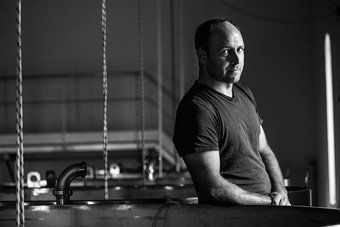
Château de Fauzan is situated on a clay and limestone plateau altitude on the land of the Liviniere. In recent years Jean Philippe Bourrel offers friendly and rather affordable wines with expressive fruit and a nice area.
-
This wine-growing estate in southern Burgundy, belonging to the VINCENT family since 1862, covers some forty hectares and offers prestigious wines such as Pouilly-Fuissé or Saint-Véran.
The expression of the terroir through its Chardonnay grape variety and the vintage, constitutes the basis of the wines of Château de Fuissé, thus fully revealing finesse, elegance and power in the tradition of the Grands Blancs of Burgundy.
-

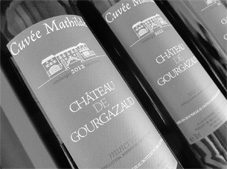
Domaine de Gourgazaud is leaned against the foothills of the Montagne Noire in the village of La Livinière in Minervois. The estate is renowned for the quality of its dry and elegant white wines.
-
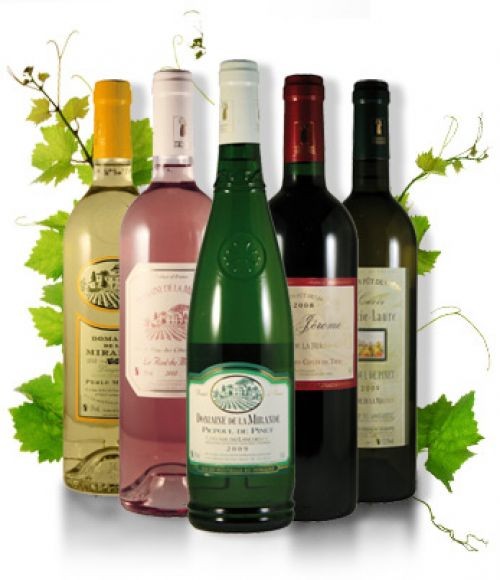
Domaine de la Mirande established in 1850 is located in the area controlled Picpoul de Pinet in the municipality of Castelnau de Guers name. Born on public land then used as a vineyard manager, Joseph Albajan bought the estate in 1988. Since its first vintage wine is bottled at the property. Each year the awards in various competitions are supporting the efforts of the lovers winemaker with vineyards and hunting wild boar.
-
The PASTOUREL family raises on the 26 hectares of the Domain, planted only in white muscat small grains,
a varied range of high quality sweet and dry wine. The wines are always of a remarkable finesse.
-
Château de Mérande - Domaine Genoux
Engaged in biodynamics, this estate located in the Arbin cru offers a wide range of wines from the soils of the surrounding hillsides and glacial moraines.
These wines brilliantly illustrate the current renewal of the Savoyard vineyard and the immense potential of its emblematic red grape, Mondeuse.The estate deserves the attention of amateurs both for its elegant reds and for its particularly intense whites.
-
The Château de Montpezat is a magical place surrounded by vines located between Pézenas and Caux. It is with passion that Christophe Blanc cultivates his vines of Mediterranean grape varieties. The range consists of fruity and elegant wines, but also more complex wines for laying down.
-
Raimond de Villeneuve has totally relaunched this family estate.
Full of energy and always ready to question the constraints imposed by the decrees of appellation, in the vineyard as in the cellar, Raimond de Villeneuve has long opted for an organic culture based on tillage (Ecocert certified in 2014 ). The nuanced and dashing whites, as well as the cool reds and beautiful Mediterranean character, are of an excellent standard.
A gourmet and deep approach that we would like to see more often in the region. -
Alexandra de Vazeilles has a degree in oenology and acquired this beautiful property in 2014. She has worked on prestigious estates in Burgundy and Bordeaux. The entire vineyard, aged from 60 to over 100 years, has been certified biodynamic since 2015. She seeks density in the wines, while maintaining a real finesse. The vinifications, which adapt to the vintage, allow for this.
-
The Château des Peyregrandes vineyard is located on the Roquessels schist to the east of the Faugères appellation.
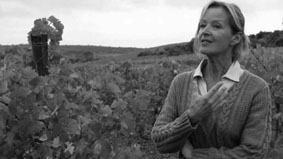
Marie-Geneviève Boudal painstakingly works out her plots in order to obtain wines combining ample materials and typical Mediterranean wines. Intensity on the nose, fruity bite, all in volume. -
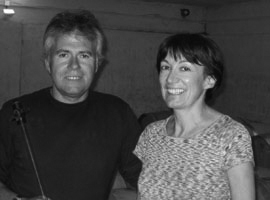
Euzière the castle, is an old family estate, run with passion by Marcelle and his brother Michel Causse, Fontanès located north of the Pic Saint Loup appellation.
The cultivation of grapes, winemaking and wine maturation are perpetuated in the tradition. The wines used to assess the characteristics of wines from Pic Saint Loup aromas namely Aleppo pine, laurel, juniper, thyme and rosemary, with harmonious velvety tannic structure. -
The castle of Négly makes the most of a noble terroir "the clap" on the cliff facing the Sea.
The Ancely, The Gate of Heaven, Le Clos des Truffiers are three wines that represent the domain. These wines at very low yields, about 10 hectoliters / hectare are harvested at optimum maturity, sorted grain by grain, vinified in wooden conical trunk and finally high two years in new barrels.
Various vintages illustrate the potential of this land with racy and complex bouquets. The estate also produces very pleasant white wines. -
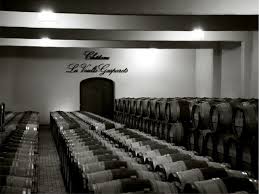
Château La Voulte-Gasparets on Boutenac terroir.
A beautiful land of pebbles, old old Carignan vines, low yields, here is the secret of this area whose reputation is second to none.
-
Alain-Dominique Perrin left nothing to chance to make Château Lagrézette one of the paragons of the Cahors appellation.
The wines come from ripe grapes, which undergo extensive extractions and very luxurious breeding: a classic style that has its aficionados. -
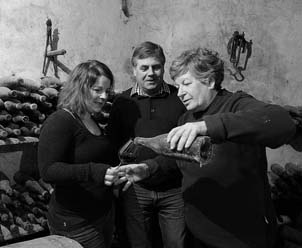
Château de Lascours is located 25 kilometers north of Montpellier in this magnificent terroir of Pic Saint Loup. Family domain for 4 generations on 32 hectares.
Clay-limestone soils and a micro-climate allow the development of red wines of great finesse with notes of liquorice, spices and garrigue that give them all their character and freshness.
Since the 2014 harvest, the wines are certified organic. -
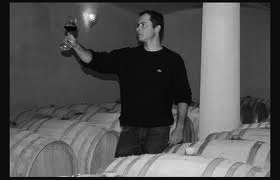
Château Montfin Jerome Raymond and Stephen.
Located Peyrac-sur-mer on the edge of the pond Montfin Castle is at the foot of the Corbières Maritimes.
The cellar récement modernized and careful work in the vineyard have borne fruit, controlled and harmonious wines.
Featured! -
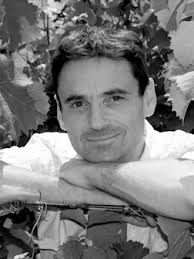
François Collard operates an exceptional terroir pebbles resting on clay and marl.
The rollers protect the soil from evaporation and add a touch of freshness and minerality in the wine tasting.
The richness of the blend contributes to the originality of the assemblies.
The wines are fruity and elegant, often further. -
Bruno Pellegrini acquired this area there are twenty years on the naming of Clape south of Narbonne.
The Castle Ricardelle and 37.5 hectares of vines surrounded by rich nature between scrub and pond bages.
The various vintages are fairly representative of this diversity.Thanks to the work in the vineyard, small yields, vinification is made without yeast addition, the wines are sometimes bottled without filtration or collage thus keeping them all living matter.
Very modern, they're in a very seductive register. -
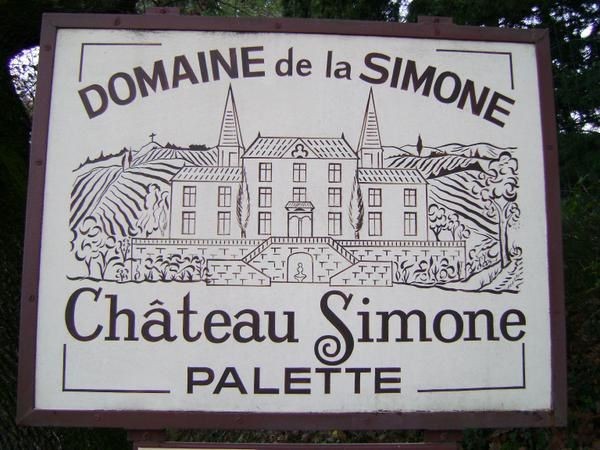
Château Simone has been owned by the Rougier family for nearly two centuries. The cultivation of the vine remains faithful to ancestral practices in its processes, without the use of chemical fertilizers or various treatments that do not respect the ecological balance. The harvest is manual and the vinification is classic and traditional.
Today, Château Simone is an undisputed benchmark of the Palette micro-appellation, recognized for the elegance and finesse of its cuvées. -
It is in a perfect green setting, in the heart of the apple kingdom, the Pays d'Auge, that the Château du Breuil has stood peacefully for several centuries.
This magnificent building has largely contributed to the fame of the small picturesque village of Breuil en Auge, the town in which it is located.
This castle is recognizable among all thanks to its magnificent half-timbering and its pink tile ornamentation, which make it one of the most beautiful estates in Normandy.
Built between the 16th and 17th centuries, the Château du Breuil has hosted over the course of history several renowned families such as the Bouquetots, the Montgommery and the Bence Tancrède de Rohan.
An architectural marvel, listed as a historical monument, the Château du Breuil has reigned serenely over the Pays d'Auge for nearly 400 years under the care of hundred-year-old trees.
Since its creation, the castle has always housed a distillery to transform cider into calvados.
-

The Porto Churchill's house is the most recent since its creation date only dates back to 1981.
The Churchill’s house only sells ports whose grapes come from vines classified "A" by the Port Wines Institute, only Grands Crus in a few kinds! Exceptional terroirs that she owns.
It is this intransigence in the pursuit of quality that has already enabled the House of Churchill’s to obtain excellent comments from Anglo-Saxon scholars. -
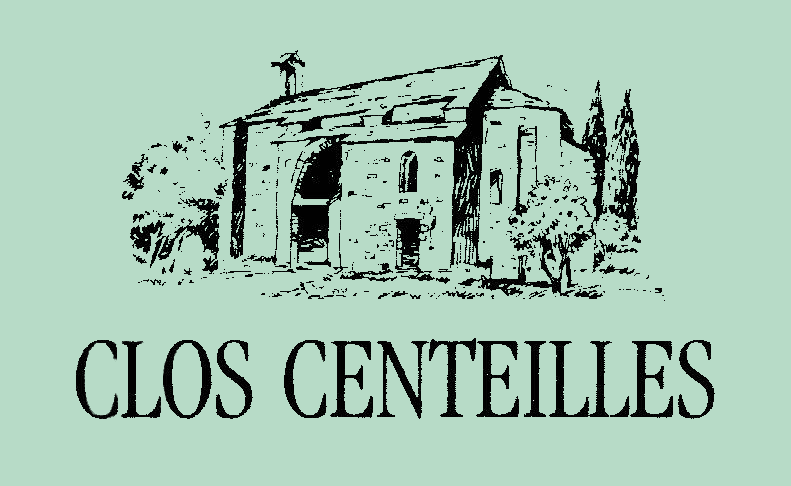
The Circle of Grape Varieties
Here, at Clos Centeilles, you will only find Languedoc grape varieties, around twenty old grape varieties, local and pampered by Patricia and Cécile to produce some of the most original and interesting wines of Languedoc. A living conservatory!
-
The evocation of the Cassis vineyard leads us more to the whites, which have managed to forge a reputation that is not always justified (it really depends on the domains and their wine philosophy).
Clos Sainte Magdeleine, created in the 19th century, benefits from an exceptional terroir at the foot of the Cap Canaille cliffs, producing wines that are both ripe and frisky, revealing one of the most beautiful expressions of Cassis. The mineral style on the finish gives freshness and persistence.
Translated with www.DeepL.com/Translator (free version) -
It is in Frelighsburg, on one of Quebec’s oldest orchards, that Louise Dupuis and Christian Barthomeuf
took the first steps back in 2002 that would bring about the creation of Clos Saragnat. The orchard and now vineyard occupy an area 35 hectares -

-
Dario Di Vaira represents the third generation of the Di Vaira family, who immigrated to Bolgheri in the 1950s from Molise. In 2008, Dario inherited the farm from his father Pasqualino and, freshly graduated in viticulture and oenology, he chose to focus on the excellent production of the territory with Bolgheri DOP wines.
Today, Dario can count on almost 10 hectares of vineyards, some of which were already planted in 1998. -

Located 8 miles from Stirling near Doune and only 45 minutes from Edinburgh and Glasgow, the Deanston Distillery is situated on the banks of the River Teith, at the entrance to the spectacular Loch Lomond and Trossachs National Park. The huge cotton mill was built in 1785 by Richard Arkwright (a great inventor of the time) and had one of the biggest waterwheels in Europe.
Despite the young age of this distillery, the production is still traditional and authentic to produce an exceptional whisky, unpeated, smooth, with notes of honey and heather. -

-
Delord is one of the only Armagnac houses to use both distillation methods: the continuous distillation typical of Armagnac and the double toast distillation.
The cellars have more than 1,000 barrels and a dozen oak tuns that mature and protect the Armagnac eaux de vie. The oldest vintages are kept in a bottle, protected from the light, in a room called the Paradise. -
Distillerie Artisanale Cazottes
The Cazottes Artisanal Distillery, located in Villeneuve sur Vère, certainly produces some of the best eaux-de-vie and fruit liqueurs in France.
A true adventurer of natural taste, Laurent Cazottes expresses the quintessence of the fruits and flowers he picks in a land cultivated in organic farming, under the Nature & Progress label and with Biodynamic practices.
Heir to the know-how of a mobile boiler, he seeks, in the work of his spirits, to combine tradition and respect for nature in order to produce the best possible quality. -
Aldo Vajra, a great winemaker from Piedmont: Aldo produces splendid barolos but also a battery of top-class wines, all of which are produced with the aim of transcribing a maximum of finesse, balance, complexity and therefore ready to satisfy the most demanding palates. sharper.
-
In 2015, Céline Peyre, her parents and Alexandre Gressent decided to build a common project, that of creating Balansa, an estate of 14 hectares of vines, in the heart of the Corbières.
They have chosen to follow a sustainable development approach and to respect the environment. They make their wines using the Natural Method.
-
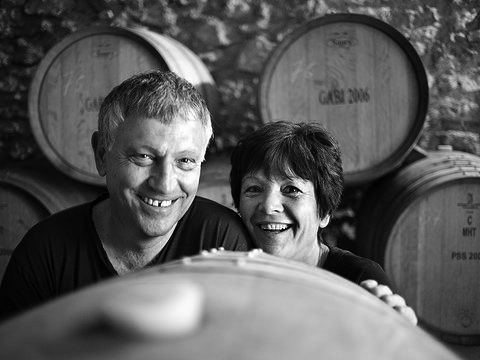
Located in Autignac the Domaine Balliccioni existed since 1998.
The vineyard is planted on schist soils at the foot of the Faugères. André Baliccioni aims to offer serious and concentrated wines with beautiful intensities gain from age two to three years.
-

Michel Escande, tic-tac-tic-tac, the troublemaker turned around, provocative, a whole program, and son Gabriel and Maxim form the magical trio Borie de Maurel in the Haut Minervois. No blablabla, the wines are as full of passion and poetry men. The Spirit of Autumn, The Feline, Belle de Nuit, Maxime, Sylla meet reading Baudelaire.
-
Michel Mas has 7.5 hectares on the terraces around Montagnac five minutes from Pezenas.
The soils are clay-limestone Mioceen.
Two parcels make up the wine, a Viognier for white and syrah for a spicy red wine.
This small vineyard represents that dream Languedoc. Laurel, pine, arid scrubland. -
Henri Ramonteu, a strong character in Jurançon, has built up and made known, in one generation, this 40-hectare estate located in the Monein area.
With a lot of thought, he has elaborated a range of dry and sweet wines that correspond to two very precise styles: the entry-level wines, accessible in their youth, in a frank style; the prestige vintages, much more concentrated and rich, destined to be kept. -
Family property since 1834, Chandon de Briailles is one of the rare estates of this rank to have converted all of its 14 hectares to biodynamic cultivation without transition. The wines reveal their expressiveness after a few years in the cellar. Aging gives them thanks and they then deploy all the complexity of the great floral and refined Pinots.
This estate is at the top of the production of Côte de Beaune wines -
Domaine Chiroulet is installed in the village of Larroque-on Osse in the heart of Ténarèze Pays Gascon on clay and limestone soils.
Philippe Fezas constantly looking for the expression of its terroir through his wines.
The wines are precise and harmonious character.
A special mention for the Coast Heux, a white wine from Gros Manseng both complex and expressive! -
The Domaine de Castelnau has ancient origins. It is mentioned from the XIII century. a possession of the Lords of Guers.
Located just steps from Pézenas, the vineyard covers a hundred hectares between plain and garrigue.
Scrubland here then appears in all its beauty and diversity.
Red ruffes It includes, dolomites, sandstones, volcanic rocks, "conglomerates" and shelly limestone from the bottom of an ancient sea that covered the region.
Clumps of thyme and rosemary, pine trees, and almond trees.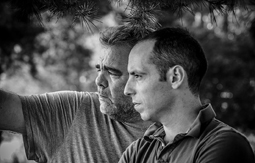
-
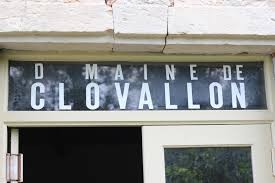
The Clovallon estate is located in Bédarieux in the upper Orb valley. It is to Catherine Roque that we owe the creation of this domain. The domain of Clovallon will make itself known at the beginning for having dared to plant pinot noir in Languedoc. And this success will not be denied. In 2012, she will entrust the reins to her daughter Alix who admirably continues the work of her mother.
-

On the banks of the Thau basin in the Languedoc, on Jurassic limestone, Julie Benau gets the best of the pedestal grape variety in Picpoul-de-Pinet PDO.
Besides the classic vintages of domaine de Creyssels, Julie produces under her name some wines (in Vin de France) without added sulphites: "Chichois à la baraquette" (white prick, "Robot Cochon" (tempranillo), "Libero" (rare and original white prickly with the most original breeding)...
-
Domaine de L'Ancienne Mercerie
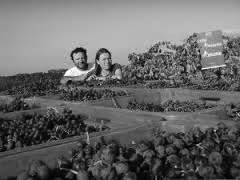
Nathalie and François Caumette have over the family estate in Faugères.
With its 16 hectares in organic farming, the Domaine de l'Ancienne Haberdashery part of those who give new life to this name.
They grow vines as naturally as possible by reducing wages and plowing the soil.
Their wines on shale are simply elegant. -
Frédéric Niger took over from Guy Bossard, a benchmark winegrower in the Nantes vineyard. The Domaine de l'Ecu has thus been certified organic since 1972 and has been involved in the life of biodynamics since 1992.
Very quickly, the estate's wines and in particular the famous Orthogneiss and Granite cuvées acquired a reputation for excellence, including outside the national territory. -
The Domaine de L'Hortus, property of the Orliac Family is located under the combe between the Pic Saint Loup and L'Hortus near Valflaunès.
Syrah and Mourvèdre dominate Grenache, barrel aging provides long-term care for large vintages. The cellar and the wooden vault are built in a splendid setting, in the middle of the pines. The wines produced are references to the Pic Saint Loup appellation.
Jean Orliac constantly searches for concentrated fruit and purity. The Great Cuvées are the standard and deserve some years of patience to develop their delicacies.
La Bergerie de L'Hortus are technical wines produced in three colors, straightforward, supple and silky, easier. A special mention for the very neat white wine. -
A child of the region, Pierre Quinonero's aim is to produce wines with a Mediterranean character, designed for ageing.
He grew up on his maternal grandfather's 1.5 hectares of vines, a few kilometres from Pézenas, in the middle of the vines and the garrigue. And it is in this same place that he built his cellar and his farmhouse with his own hands in 1991.
Self-taught, he works alone, without an oenologist, and has replanted Grenache and Syrah from massal selections. He has a basalt terroir but also cooler plots with rolled pebbles in the subsoil. -
The domaine of Provenquière is located 10 kilometers west of Beziers, in the municipality of Capestang. There since the fifteenth century and belongs to the Robert family since 1954. It is currently the third generation manages.
The diversity of varieties and the multitude of terroirs floor and exposure, allow to offer a wide range of products;
varietal wines francs and easy to assembly most unusual.
Vintages "P" Forbidden Fruit and The Invincibles are an excellent value. -
The Domaine de la Rectorie is a family property today managed by Jean-Emmanuel and Thierry Parcé, a true flagship of Roussillon in the Banyuls and Collioure appellations.
An exceptional consistency of the range, in the three colors in dry wine as in natural sweet wine.
-
In Badens, in the heart of Minervois, "Tonton Raymond", through its wines and its terroir, tells us the history and the typicity of the traditional grape varieties of Languedoc. The cinsault and, of course, the Carignan are in the spotlight on the property, a thing unfortunately increasingly rare ...
-
Pioneers of quality grape varieties in Languedoc, particularly with the introduction of Merlot, Cabernet Sauvignon and Petit Verdot in the early 70s, Guy and Marc Benin, produce wines since 1978 upscale country of strong character, original and atypical.
-
Domaine de Valensac belongs to the family for several generations. Living in Brussels, the management domain is assigned to Edwige Thuille, dynamic and enterprising young woman.
This property of 49 ha located just ten kilometers from the Mediterranean in the heart of Languedoc-Roussillon, enjoys the maritime influence and cool soils, ideal for the production of white wines balanced conditions.
Domaine de Valensac grows fairly standard varieties for this region, Sauvignon, Merlot, Cabernet Sauvignon, Chardonnay (almost 22 acres) of vines but also much less likely in Languedoc as Petit Manseng, Riesling or Petit Verdot, which give the area a true originality.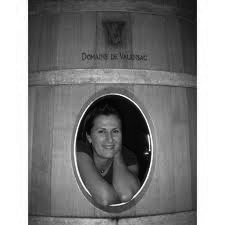
-
Agronomist engineers, Corine and Yves-Jean Houser acquired in 2007 this 7 ha vineyard for which they initiated organic (AB certification in 2013) and biodynamic (Demeter) conversion.
This Cairanne estate offers several cuvées that are regularly at the best level of the appellation. -
Georges and Romain, a duo concerned with quality and respect for the environment and the consumer, cultivate the Domaine des Pothiers using biodynamic agriculture. The natural and careful vinifications allow to obtain greedy AOC Côte Roannaise wines where the fruit of the gamay saint-romain and the minerality of the granite are fully expressed.
The Domaine des Pothiers is a pleasant surprise for the Loire wine lover.
-
Domaine des Soulié, is a family winery located in Assignan in Saint-Chinian appellation, at an altitude of 250 meters on clay-limestone soils.
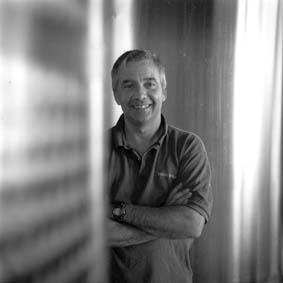
The 27 hectares of vineyards are in organic farming since 1960, in respect of nature and the environment (ECOCERT). This makes Domaine des Soulié one of the precursors in this region in terms of organic farming!
-
Évelyne de Pontbriand spares no effort to enhance her Angelin estate, which maintains, above the Loire, one of the most beautiful heritages of Savennières vineyards.
The range is available by terroir, which results in a more nuanced expression of the wines of the vintage, served by a biodynamic approach.
Classically crafted, the wines gain in finesse and purity in the latest vintages; they age gracefully. -
-
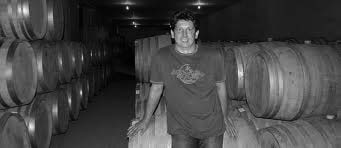
The area is divided Gardiés two soils, shales on the Espira Agly and clay-limestone on Vingrau under the cliffs. Jean Gardiés has precept to respect the land and nature, most of the work is carried out first in the vineyard. Year after year the wines are silky, smooth and pure.
-

Gauby Estate
The wines of the Gauby estate are among the most famous in the South of France.
The Roussillon region is recognized today as a land of great wines, Gérard Gauby aiming for excellence for his wines is a big part of it. Domaine Gauby is a reference whose reputation is recognized worldwide.
-
Passionate, innovative and uncompromising on quality, the Team of Domaine Gayda, under the leadership of Vincent Chansault, is one of the players who has made a significant move between Languedoc viticulture and has earned it recognition far beyond regional borders.
By implementing organic, clean and sustainable viticulture, Domaine Gayda has the will to safeguard the natural environment while offering the consumer quality wines. -
This estate was founded in 1782. Today, Bénigne and Louis de Surrel manage a heritage of grand cru and premier cru vines that rival those of the famous Rousseau and Trapet estates in quality.
The international reputation of their wines is rising rapidly with the latest vintages!
For Domaine Henri Rebourseau, each appellation must be brought to its best level. There is no such thing as a Rebourseau taste. In each cuvée, the quality advocated is that of the climate forming the heart of the wine's identity.
Pure expression of the great climates of Burgundy, the wines of the Domaine Henri Rebourseau are vintages with an ageing potential of about 10 years for the villages to more than 20 years for the great vintages, and even much more depending on the vintage. -
The domaine J. Laurens specializes in the production of sparkling wines in the appellation Limoux.
The wines are the expression of a delicate assemblage of chardonnay, chenin and mauzac. -

Patrick Jasmin chooses finesse and distinction in his irresistible Côte-Rôtie. A winemaker from father to son for four generations, Patrick has been working on the family estate since 1978. Currently, the estate covers 6 hectares of 11 parcels in Côte Rôtie, which are composed of 95% Syrah and 5% Viognier. All his wines are made in the traditional way, aged in oak barrels in his underground cellars.
-
-

This estate is a reference for Languedoc wines high-tasting !!!
The Domain The Tale of Floris was created in 2000 by Daniel Le Conte des Floris, former journalist of the Revue du Vin de France. A small farm in Languedoc of about 7 hectares, the vineyards are located between Pézenas, Caux and Gabian. The winery is located in Pézenas, in the heart of the village and the Languedoc-Pézenas appellation. The estate is in organic agriculture (Ecocert) and biodynamic (Demeter).
-

François Douville, an agronomy engineer and oenologist, settled in Roussillon around 2000, taking over an abandoned estate in the rugged landscape of the Aspres, at the foot of the Canigou.
He started out as an organic grower, slowly and surely with his horse Achille, and cultivates 9 hectares of vines, preserving the hedges between the plots. -
For several years, Gilles Azam's production has been centred around a few well-defined vintages.
The fruit of careful viticulture, aware of the value of the place and the historical basis, his wines have an assertive character and fresh, intense flavours that will blossom when exposed to the air.
The estate has established itself as a point of reference for the entire Limoux appellation. -
Located in Santenay in the south of the Côte de Beaune, the Louis Lequin estate brings Burgundy wine traditions to life while modernizing processes and innovating in its approach to viticulture.
-
Domaine Marcel Deiss is one of the great wine estates of Alsace.
Mathieu Deiss succeeded his father Jean-Michel at the head of this venerable domain of Bergheim.
Complantation is always the common thread, even in the Grands Crus. Even if the process is ancestral in the region, it remains very little followed and strongly divides the winegrowers. The Deiss take this step further and deliver compelling, complex wines with wonderful flavor intensity and incredible balance. -

Jean-Luc Matha produces marcillacs on a terraced vineyard estate in Bruéjouls in Aveyron. His wines are always deep. Time, low yields, indigenous yeasts and even music give the wines their unmistakable personality.
-
Romain Benet founded his estate in 2016 with his wife Anne. Nova Solis means "new sun." Located in the heart of the Larzac Terraces appellation area in the Herault Valley, they breed great wines faithful to the freshness of this beautiful terroir.
-
The Domaine Pujol and its 140 hectares are part of the history of Minervois. Now it is Stéphanie and Emmanuel, the two cousins, the 5th generation, to take on the role of winegrower. The family farm set in motion a new dynamic: intense work was carried out in the vines, the dressings and the vintages were reviewed and the decision to switch to certified organic farming!
-
Rémi Jalliet's estate now covers 6.5 hectares. It includes ten or so parcels of vines aged between 35 and 80 years old, scattered on clay-limestone slopes, in the middle of the garrigue and the rocks.
Rich in aromas and flavours, Rémi's wines are very charming. Powerful but balanced, they offer a beautiful expression of the wild terroirs of the Corbières. -
The reputation of the Rémi Jobard estate is to produce wines with finesse, smoothness and minerality and above all capable of ageing with race. With such a name, he could only make crazy wines! Thus, simple Burgundy is eaten as a "village", "village" as 1st vintages and 1st vintages as great vintages with good value for money.
-
The Arbois appellation owes a lot to the Rolet estate. Over the years, he has managed to keep his own style, an alliance of a classic style rooted in Jura taste and good technical mastery.
-

In 1995, Frederic Albaret from Montpellier bought 13 hectares of vineyards on the land of Cabrerolles Faugères and created the Domaine Saint Antonin. Three wines are offered, The Gardens, and The Lou Cazelet Magnoux. These wines are typical of the appellation, aromas of red and black fruits, dense shades of cedar, velvety and crisp.
-
Over a period of more than ten years, Elizabeth and Jon Bowen have gradually come to appreciate the connections between their plots of land in the Hautes Corbières with their complex soils and the multiplicity of local grape varieties.
The style has already been considerably refined and brings out the power of the terroirs. -
Created in 2002 in Caux by Philippe Richy, the Stella * Nova estate produces wines from biodynamic agriculture. His concern is to produce natural wines, identifying with their respective terroir, but always with great precision, with lots of fruit and without aromatic deviance.
-
Lemon, grapefruit and orange peel, a hint of sea spray and an iodine sensation. Orange blossom and jasmine tea float in the background. Beautiful bubbles, a pure and straight wine
-
Historic and qualitative domain of Roussillon, the Vaquer domain is a past master in the art of producing some of the greatest natural sweet wines in the south of France. From old dry wines (white and red) to antique sweet wines, look for these amazing and rare cuvées.
-
In Ponte Leccia, a high-altitude village located at the crossroads of the roads leading to Bastia, Ajaccio and Calvi, Clos Venturi is one of the most recent estates in Corsica. It comes from the detachment, in 2005, of the best terroirs of the Vico estate, where Jean-Marc and Manu Venturi also produce, on 77 hectares, more technical wines of great diffusion and a good quality-price ratio. A lot of work has been done at Clos Venturi: replanting of indigenous grape varieties, organic farming and use of indigenous yeasts. The cellar is remarkably well equipped (barrels, vats and eggs; wood, concrete, stainless steel).
-

Domaine Weinbach is undoubtedly an essential reference for Alsace wines.
The vines of Domaine Weinbach, on rich and diverse terroirs, benefit from the privileged microclimate of the Kaysersberg valley.
Internationally recognized, the wines produced by the estate are sought after by all connoisseurs. They shine with their refined style, their harmonious richness and exemplary precision.
-
Domenico Clerico is considered a beacon in the landscape of the prestigious Barolo.
His burgundy-style approach has won over critics around the world and we are charmed by these wines absolutely sublime!
-
An irreducible winemaker" is as Benoît Braujou, winemaker at Domaine Fons Sanatis, describes himself. On his 7 hectares of vineyards, he works alone with his draft horses Bulle and Unau. A work of art imbued with the experience of the three generations of passionate winemakers who preceded it, with respect for nature and the land.
Fons Sanatis, a curiosity of Languedoc that is worth a visit. The pleasure of straying is truly unparalleled!
-
The Foursquare distillery is quite new. It was founded in 1996 by Richard Seale, on the site of an old sugar factory in Barbados.
But it was a quick success, and the catalogue of references is constantly growing: Dominus, Empery, Sagacity, Redoutable... So many creations that unleash the passions of a large community of followers. In particular the Exceptional Cask Selection range, which, as its name suggests, brings together exceptional vintages. The vintages are also remarkable: 2004, 2005, 2008, 2009...
It is fair to say that in record time, Foursquare has become a venerable institution! -
The Fratelli Branca distillery was founded in Milan in 1845 by Bernardino Branca and his three sons. For almost 180 years, the famous Italian company has continued to represent "made in Italy" with the same pride and high standards.
It produces Fernet-Branca, the world's most popular fernet (a spirit made from a maceration of herbs and spices, similar to vermouth). -

Created in 1981, the estate is still owned by the Grosset family. It is located in Auburn in the Clare Valley, 100 km north of Adelaide. It covers 22 hectares and produces 11,000 cases. The certified organic estate has three parcels of Riesling and one of Cabernet Sauvignon.
Grosset has been certified organic for many years.
-

After 265 years of production dedicated to confidential trade bottlings, the Hampden distillery is launching its own aged rums on the international scene in 2018.
With an extraordinary aromatic richness, Hampden Jamaican rums are also distinguished by an ancestral manufacturing process and a complete maturation in the tropics.
-
Madeira Island is located in the Atlantic Ocean off the coast of Morocco. This volcanic archipelago benefits from a temperate oceanic climate which allows the elaboration of great wines to this day still confidential in France, which makes them all the more seductive for amateurs.
Maison Henriques & Henriques has been producing and exporting Madeira wines since 1850. Henriques & Henriques is the largest independent producer and shipper in Madeira and the only producer in Madeira to own vineyards. -
The Isle of Arran is the seventh largest island in Scotland and lies to the south of the Outer Hebrides. There is now only one whiskey distillery, Isle of Arran, but not the least because the quality of the water contributes to the reputation of its whiskey.
-
The J.H. Andresen house was founded in 1845 by a young Dane who arrived in Portugal penniless but full of ideas, talent and courage. This house is still in the hands of the family and this independence allows the Andresen house to continue to defend this vision made of requirement in the selection of grapes and in the quality of the blends and patience to give the Port time to age quietly. in barrels or in bottles.
The Andresen house is very famous for its Vintages and Colheitas. Although very attached to its traditions, it also knows how to innovate, it is absolutely necessary to look at their 10 year or 20 year vintage white Port. -
The Jasci family has been guided by a passion for wine since the 1960s. Giuseppe Jasci and his wife Maria, representing the second generation of winemakers, initiated organic farming at the estate in 1980, making it one of the first Italian wineries to be certified organic.
-

What is behind the name Jeff Carrel?
A wide range of wines, some organic, some from Domaines and of course the Jeff Carrel brand, Maison Carrel as aging and refining cellar, Cuvier Carrel for wine from organic farming and Domaine d 'Ansignan, a vineyard in the Pyrénées Orientales made up of old vines. -
Domaine Averoff is a 15 hectare wine estate located in northwest Greece, in the Metsovo region of Epirus.
Dimitris Ziannis, the winemaker of the estate, produces 50,000 bottles per year. Domaine Averoff practices viticulture that respects the environment. -

Paul and Marie Ryckwaert create their wine for pleasure.
In the Languedoc, La Closeraie is a single estate (7 hectares) facing the terraces of the Larzac, Mont Saint Baudille and the Rocher des Vierges. In 2017, Marie and Paul fell in love with this place surrounded by forest and river, located in the commune of Saint-André-de-Sangonis. -
The Font des Ormes estate occupies the top of a slight limestone eminence dominating a vast expanse of vines between the villages of Caux and Nizas. It has a typical Languedoc architecture.
If the oldest parts date back to the 15th century. s., most of the building dates back to the 18th century. s.s. The landscape was then quite different, marked by the polyculture and the diversity of production: cereals, olive trees, truffle oaks, flower meadow ... This is what it's all about becoming this beautiful property again.
The landscape is being restructured and the 23 hectares of vines, 10 of which are in AOC Pézenas, now rub shoulders with 2 hectares of olive trees. -
Sophie Valin and François Aubry have been working in the Salagou valley since 2003, converting old vines to organic farming and re-establishing a herd of hardy sheep on 30 hectares of woodland and pasture.
Each of the wines expresses the personality of each grape variety and each parcel (geology, exposure).
Patient and meticulous manual harvesting and a natural vinification without inputs ensure the respect of these potentialities. -
Luca de Marchi (Proprietà Sperino) has recently taken over this renowned (and also historical) estate in management, the style is close to that of Sperino with a slightly more modern and consensual tone. Typical terroir of sea sands and perfect micro-climate with strong thermal excursions allowing to produce wines combining freshness, delicacy and delicacy.
-
La Quintinye Vermouth Royal is a French vermouth produced in the heart of the Charentais vineyards, an illustrious French terroir. It takes its name from Jean-Baptiste de La Quintinye, a Charentais by birth, a visionary botanist and an exceptional gardener.
It is a vermouth with rich and opulent aromas, made from a unique blend of wines and Pineau des Charentes.
Elegant and refined on the palate, delighting and refreshing the taste buds. Crowned with a shimmering bouquet of natural spices and herbs, La Quintinye enchants aperitifs and cocktails with its perfect alchemy. -
The estate was created in 2004 by Frédéric and Marie Chauffray, passionate and self-taught winegrowers, in one of the highest, and therefore coolest, sectors of the Terrasses du Larzac.
The agronomic approach is biodynamic. Like the viticulture, the vinification is very close to the natural cycles. -
Hervé Bizeul, passionate winemaker, installed Vingrau offers quality wines, taking advantage of different terroirs of the Roussillon.
-
Jean-Baptiste Granier started the Vignes Oubliées project with Olivier Jullien. The approach is as singular as it is meritorious: it was born of the desire to preserve old plots of land condemned by the cooperative economic logic, now cultivated in partnership with their owners.
In this very dynamic area, this estate is constantly growing. -
Lucien Aviet - Caveau de Bacchus
Vincent Aviet, son of Lucien known as “Bacchus”, a key figure in the Jura vineyards, perpetuates the traditional expression of local wines on plots of old vines.
Maintaining a classic style but far removed from any routine, these winegrowers produce wines of great sincerity, deeply rooted, which culminate with yellow wine and superb trousseaux declined by terroir.
The wines are quite rare and the amateurs are numerous: an area to follow very closely. -
Lustau is considered today as a world benchmark for quality Jerez wines. Its bet to combine tradition, innovation and quality in its wines and its wide range of Jerez has been rewarded and recognized by a multitude of prizes.
-

Located in San Martin de Valdeiglesias, near Madrid, Bodega Marañones is the work of Fernando Garcia, a fervent advocate of natural wines.
At the confluence of the Sierra de Gredos and the Guadarrama mountains, its sloping vineyard, perched at an altitude of 750 m, is swept by a constant wind, an ideal condition for healthy grapes.
In addition to the scenic value of the D.O. Vinos de Madrid, Fernando also relies on the oenological value of the grape varieties that come from it, such as albillo real and grenache noir.
-

Mas Cal Demoura is one of the pioneering areas that contributed to the qualitative revolution of Languedoc wines. The precision of the wines acquired in recent years places this domain among the best areas of the South of France.
-
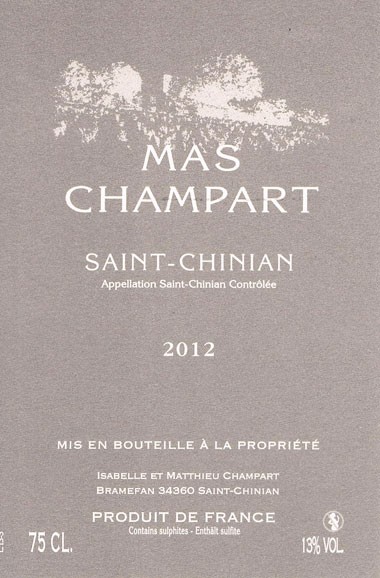
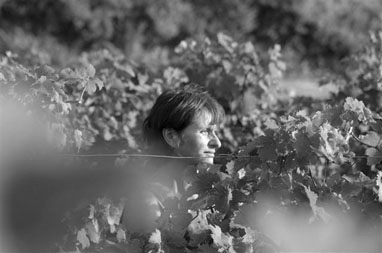
An investment in a field being refused by the banker, the Champart you start in 1976 gradually buying old vines abandoned. After restoration of the vineyards and replanting of certain parcels, the grapes are brought to the cooperative until 1988, the year of their first batch of wine in a cellar near the field.
-
Catherine Roque, after her success at Domaine de Clovallon, took over in 1997 a forgotten vineyard at the highest point of the Faugères appellation, Mas d'Alezon.
At Mas d'Alezon, the wines are aged in the most natural way possible, with the minimum of human intervention. The wines are of great finesse and rare nobility.
All the wines of Mas d'Alezon place it at the top of the appellation. -

MAS DEL NOVI, also called Domaine Saint Jean du Noviciat, is a property of 100 hectares (including 40 hectares of vineyards) grouped around the body of the building, including among others a vault and ... a chapel.
This vineyard is located precisely in the town of Montagnac, in the heart of Languedoc. Since 1994, following a change of ownership, the Domaine produces, vinifies, raises and bottles harmonious wines of good quality. -
Le Mas des Bressades is located in the Costières de Nîmes, in the south of the Rhône valley. It stretches across 45 hectares north of the Camargue, where the vines are planted at an altitude of 70 meters, on pebbles rolled by the Rhône.
Today, Mas des Bressades continues the tradition by producing AOC Costières de Nîmes known for their concentration and regularity, Costières de Nîmes with incredible quality-price-pleasure ratios! -
The estate was created on the family land of Géraldine Combes, a local child, daughter and granddaughter of winegrowers. Xavier Peyraud also comes from a winegrowing family, grandson of Lulu and Lucien Peyraud of the famous Domaine Tempier in Bandol.
The Mourvèdre grape variety finds here one of its most masterful expressions in Languedoc. It must be said that the vines planted here in the Terrasses du Larzac come from massal selections of the Domaine Tempier in Bandol. -
A photographer by training (Lumen means "light" in Latin), Pascal Perret discovered the region, case in hand, before setting up his small cellar in Gabian in 2001. His practice and his analysis of large bottles compensated for a late approach to the vineyard. and winemaking. Its reds reflect a great rigor in the development of wines in the spirit of the best faugères, its white is simply wonderful!
-

Mas Mellet is a vineyard located in the hills of Vauvert Galician.
Taken over in 2003 by Emily and Brice Bolognin, only 12 hectares of old vines are in production in organic farming on 27 hectares on the holding.
Carignan was planted in 1948.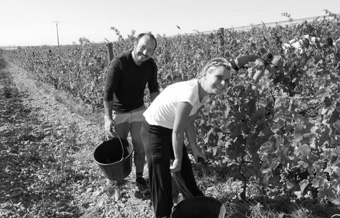
-

The Argentinian estate of Matias Riccitelli is located in the heart of Vistalba in the Luján de Cuyo region in the province of Mendoza. The vineyards extend over 20 hectares at the foot of the Andes mountain range between 920 and 1120 meters above sea level.
Matias Riccitelli is one of Argentina's most exciting young winemakers. He makes a range of wines that challenge many of the preconceptions of the Mendoza region. Its wines are very fine.
-
-
Nanclares y Prieto is an innovative winery from Galicia, which seeks new ideas in the way of producing of yesteryear. His working philosophy emphasizes maximum respect for the grape and minimal intervention in the wines.
Alberto Nanclares and Silvia Pietro produce, from the albariño grape, Rías Baixas of great depth and which age admirably.
-
An emblematic domain of the Douro!
-

We offer three Noilly Prat, the Noilly Amber only available at the cellar in Marseillan: Noilly Prat Dry This is the original recipe from 1813 that has predominance chamomile and coriander.
It is best known in France and around the world. Noilly Prat Rouge Developed in 1956, holding aromas of cloves, nutmeg, and cinchona bark.
Noilly Prat Amber Established in 1986 with more sweet notes thanks to the presence of vanilla, cinnamon and bitter orange peel. -
Olivier Rivière is part of the talented new generation of Rioja winemakers, a member of the "Rioja n' Roll" collective, and is certainly one of the most interesting winemakers in Rioja at the moment.
While those of the region are typically hierarchical according to a more or less long maturation (joven, crianza, reserva, gran reserva), Olivier's wines are inspired by the Burgundian model and its specific classifications for each terroir (generic appellation, communal, premier cru and grand cru).
His wines are mineral, fine and racy. He seeks freshness, balance and preservation of the fruit. -
-
With an area of 32ha, the vineyard of Bébian extends in the foothills of the Cevennes, in the area of Coteaux du Languedoc classified Cru Pezenas. One of the jewels of the region!
It has the particularity of being extremely fragmented. In fact, over time, only the 43 parcels representing the greatest geological interest, the best exposure, have been preserved, ie a south-southwest orientation.
For the wines, the grape varieties are composed of Syrah, a mass selection from Chave en Hermitage and 2ha recently planted from Beaucastel to Châteauneuf-du-Pape, Grenache from Château Rayas in Châteauneuf-du-Pape, and Mourvèdre from Domaine Tempier in Bandol.
They grow on arid and stony soils of 3 natures: limestone and clay-limestone of Villafranchien, basalt of volcanic flows, clay-siliceous (white quartz pebbles and travertine / pink marble -
Also located in Haut-Piedmont, the domain which had been abandoned was taken over in 1999 by Paolo and Luca (his son) de Marchi.
The micro-climate with almost perfect thermal variations and the terroir made up of sea sands give wines of great elegance, of high 'taste' one might say.
Burgundy lovers meet there with pleasure! -

The Proyecto Garnachas (Grenaches Project) is a journey through the history of Grenache in Spain. The result is a collection of fruity, fresh and mineral red wines, able to express the versatility and uniqueness of each production area.
-

Recaredo ist ein historisches Weingut in Katalonien. Produzent von Schaumwein von höchster Qualität. Recaredo war schon immer ein Synonym für Qualität und wurde für seine Tugenden gepriesen: tiefe, komplexe, seidige, lebhafte, elegante und langlebige Weine.
Es sind Weine, die nur aus Trauben von eigenen Weinbergen hergestellt werden, die nach biologischen und biodynamischen Grundsätzen angebaut werden (beide zertifiziert), ohne Zuckerzusatz (immer Brut Nature) und die lange in der Flasche reifen, Naturkorken (Kork) und manuelles Degorgieren bei Raumtemperatur, ohne dass der Flaschenhals eingefroren werden muss. -

In 2020, Mark Reynier's pioneering new Renegade distillery in Grenada went into production.
With an investment of $25 million, it relies on both sophisticated technology and local farm production to produce local rums through thoughtful and rigorous distillation.
Located on the northeast coast of the Windward Island, it uses state-of-the-art pot stills and column, distillation, air and water filtration systems. -
Romain Portier - La Petite Parcelle
Romain Portier has already worked in the wine industry, namely culture manager for various estates in the region and wine merchant before getting to making his own wine. In 2011, he bought an abandoned plot in Saint-Jean-de-Fos, 70 ares, of which he produced the first vintage in 2012.
Since then Romain has come a long way. The estate now consists of 5 ha in the towns of Jonquières and Montpeyroux.
Planted with Marsanne, Grenache Blanc, Cinsault, Syrah and of course Mourvèdre, the vineyard is nestled in the comforts of Larzac. -
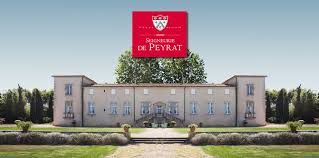
In the 1980s, the great grandson of Gustave Fayet Luc Viennet and his wife Béatrice undertook a complete restructuring of the vineyard. Since 2010, Cécile Viennet the 5th generation take care of the property and continue the maintenance and restoration work.
-
Tradition, this term is omnipresent in this winegrowing family.
After their parents Paul and Geneviève, Florent (in the vineyard) and Mathieu (in the cellar) perpetuate the authentic work of the harvest. On their 30 ha estate, they can play on two terroirs: the black schists of Maury and the granitic arenas of LesquerdeIntense, deep, as if sculpted by the elements into the material of the terroirs, these wines make up a harmonious and very qualitative range.
-
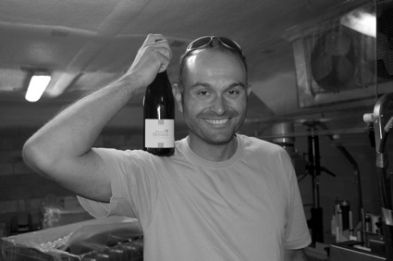
Laurent and Cylia Pratx are the perfect example of the last generation of Rousslllon winemakers inspired by the diversity of local grape varieties and the richness of black shale and pebble soils.
They multiply the cuvées whose thread remains the gluttony and velvety. -
Andrea, the son of founder Rino, is now in charge of the estate. Owner of plots on five vintages of the appellation, Sottimano produces five distinct barbaresco, vinified identically, with French barrel farms. Like Burgundy vintages, tasting here is always a great lesson of the different terroirs of this area.
Already very qualitative, production has reached new heights in the last five years. A journalist from a great Italian guide recently told us: "Andrea sets new standards, he will write his page in the history of Barbaresco." Prices remain very wise, despite the current rating. -
Springbank is a legendary distillery in more ways than one. Founded in 1828 in Campbeltown, it is Scotland’s oldest independent family owned distillery. It is also one of the smallest distilleries in the country. Springbank is also the only Scottish distillery that malts all of the barley used to make its single malts.
-
This estate, created in 2006 by Francisco Javier García Núñez and Roberto Santana, is located on the island of Tenerife (Canary Islands), in the heart of the Valle de la Orotava appellation, a famous area of wine tradition.
The 9-hectare vineyard, made up of century-old vines planted in a braided cordon, is located between 350 and 700 metres above sea level on the volcanic slopes of the north of the island. Most of the estate is made up of hundred-year-old vines. -
At the northeastern tip of Spain, a stone's throw from Collioure, is the Spanish appellation Empordà.
It was there that the Bournazeau family, of French origin, created the Terra Remotail estate some twenty years ago. About fifty hectares make up the estate, half of which is planted in vines. The Mediterranean is about 15 kilometers away. -
Vidal Fleury en Côtes du Rhône
Founded in 1781 from its vineyard in Côte-Rôtie, Vidal-Fleury is the oldest house in the Rhone Valley still in operation.
Its cellar is located in the heart of the Côte-Rôtie vineyard.
Since the 1920s, Vidal-Fleury has been developing and marketing an extensive range of wines exclusively from Appellations de la
Rhône Valley respecting the typicality of each terroir. -
Villa Tempora is located in the Protected Designation of Origin area "Languedoc-Pézenas", in Hérault. It is an organic farming area (Ecocert certified) with constant respect for the environment and the terroir. The midday sun and the cool northerly winds are found in their wines.
-
-

A revolution has shaken the whisky category in 2020: Waterford Distillery!
Led by the renowned Mark Reynier, the project has put the emphasis back on barley, at the heart of the final flavour of a single malt, through an ambitious triptych of Terroir, Traceability and Transparency.
Inspired by the world's greatest winemakers, Waterford is relentlessly applying the same philosophy, methodology and rigour to single malt whisky. -
Die Domaine Van Volxem ist eines der ältesten und bekanntesten Landgüter im Saartal im Herzen von Wiltingen. Es produziert Weine, die von der Energie des Bodens getragen werden, mit würzigen Konturen um einen fruchtigen Kern von außergewöhnlicher Reinheit. Eleganz und Licht sind überall, für unser größtes Glück.